
how I make my BBC programme Human Intelligence
and what it's taught me about research (including AI for research). plus! chill games, 'young people culture' and the movie from Iran to watch this week

The new series of my BBC Radio 4 programme Human Intelligence started this past week, and in honour of that I thought I would do a post about how we make the show! We have three weeks to start the year with - on exiles, perfectionists and recluses. There are at least two of them who I hadn’t heard of at all until I started looking around for other people to fit into the theme. This post is mostly about how we choose the right people for each week, and what I’m doing when I’m interviewing academics. There might be another post to do sometime on the writing and recording parts!
Links to the episodes above are on Spotify and here is the BBC link which for some reason does not come out looking so beautiful in Substack.
first, a little horn-tooting
The Week magazine chose us as a 2025 podcast of the year, The Observer said: “each 15-minute episode drops like a vitamin shot for the brain in the murk of a midwinter afternoon”. The Telegraph called it “an epic romp” through the history of ideas and “one of last year’s radio highlights”. And on the best Substack in the world, India Knight said it: “will come to be viewed as one of the great radio programmes… It is written and presented with such fizzing cleverness, wit and originality that it feels really fresh.” Which was so lovely I almost fell over.
I have permission from the BBC to post some extra material up here, which I’m going to pepper the year with, some deep dives into some interesting brains. And just before I start, I really want to thank the producer Anishka Sharma who has been ABSOLUTELY AMAZING at getting this programme made and sounding great.
what am I, in essence, going for?
I got asked if I’d like to make this show in summer 2024 and I almost bit their arm off. It was as I was coming to the end of working on my book about the Information Crisis: you can buy a copy here. And I’d been thinking a lot about what happens during information crises, what we need to get us through. I loved this passage from Neil Postman’s brilliant book “Technopoly” where he talks about how to create a curriculum for the modern age, something that can draw us together not split us apart:
“One obviously treads on shaky ground in suggesting a plausible theme for a diverse, secularized population. Nonetheless, with all due apprehension, I would propose as a possibility the theme that animates Jacob Bronowski’s The Ascent of Man.
It is a book, and a philosophy, filled with optimism and suffused with the transcendent belief that humanity’s destiny is the discovery of knowledge. Moreover, although Bronowski’s emphasis is on science, he finds ample warrant to include the arts and humanities as part of our unending quest to gain a unified understanding of nature and our place in it. Thus, to chart the ascent of man, which I will here call “the ascent of humanity,” we must join art and science.
But we must also join the past and the present, for the ascent of humanity is above all a continuous story. It is, in fact, a story of creation, although not quite the one that the fundamentalists fight so fiercely to defend. It is the story of humanity’s creativeness in trying to conquer loneliness, ignorance, and disorder....
Each subject can be seen as a battleground of sorts, an arena in which fierce intellectual struggle has taken place and continues to take place. Each idea within a subject marks the place where someone fell and someone rose. Thus, the ascent of humanity is an optimistic story, not without its miseries but dominated by astonishing and repeated victories. From this point of view, the curriculum itself may be seen as a celebration of human intelligence and creativity.”
Highlights are mine. I find this so inspiring. Can I hope to make work as good as Postman and Bronowski? Probably not, at least not in 15-minute chunks that you listen to over a bite of lunch. But I can put their aspirations at the centre of my mind.
Better to try for something this glorious and fail than try for something less noble and succeed. This is what I want to make: a celebration of the ways that knowledge and understanding have been hewn from the rock face. How much it’s taken to get us all the things we know now.
how do we decide who to put in?
In the spring of 2025, I was walking around La Rochelle thinking about Marie Curie. I’d gone to La Rochelle because - essentially - of Tricolore which assured us at that time that il y a beaucoup de choses a faire et a voire a La Rochelle. It was a spring break, anyway. And I was thinking about Marie Curie because on the gorgeous television adverts for Human Intelligence we had said that we would do Marie Curie! But the thing is, I would never want to put her into a week of female scientists or something obvious like that. I like to start out telling you things about somebody that maybe you didn’t know about them. Coming in sideways on a subject.
So, pondering Marie Curie I remembered that she came from Poland and I had read a very moving account somewhere of The Flying University, which was how she and other Polish women got their education, and that she’d had to go to Paris to do higher level study. So, just as it happens with novels, without really intending to be thinking about it I found that I was wondering about other exiles. Who would we put in the list? I almost immediately thought of Karl Marx who wrote Capital in the British Museum (the British Library was part of the British Museum at that time.) And I thought of Ovid who I wrote a module dissertation in biography on for the biographer Richard Holmes, when I was at UEA. Those felt like three very solid and very "Human Intelligence" type people. People who you want to know more about, people who maybe you've heard of a little but don't know a lot about, some people who you instantly go "oh yes I see how they're important to the world we live in".
The Creative Director of Factual at BBC Studios Audio, James Cook, gave me some advice when I started making the programme: “never overestimate your audience’s knowledge but never underestimate their intelligence.” I think that's such a good and clever piece of advice. Don't talk down to people, they will be able to follow as quickly as you can speak, you don't need to overexplain. But also, don't forget that they haven't done the reading on this subject that you have.
(I actually think that might be quite a good rule for Substack as well. There are clearly a lot of intelligent people here who want something interesting to read – they haven't read what you’ve read but they can perfectly well follow when you talk about it.)
fleshing out the list
I had quite a lot of other ideas too. I thought of Nabokov, whose Pale Fire I think is about the experience of being an exile, and which I must write a post on here. But in Ovid I did already have an as-it-were ‘creative writer’ and I do like to try to keep Human Intelligence quite varied. Ideally I am looking for each person in each week to have a different field of work, preferably different origins and have spent their life in a different place, come from a somewhat different time period, and if I can to have a different relationship to the main theme (with The Manhattan Project they were obviously all contemporaries but I wanted them very much to have different relationships to the project itself).
So Ovid’s work was made worse by exile, Curie could not have got the education she got in Poland at the time but continued to feel very Polish. Meanwhile Marx was enabled to do his work by access to materials in London. I’m looking for different lenses to use to think about ‘exile’ and what it does to thinking.
In the programme about the historian Pamphilla I talked about how she organised her material to create a spangled quality, a sense of variety, interest and surprise. I realised that that’s what I’m trying to do as well. I want you to have some people you’ve heard of that you can hold onto, and at least one or two that you’ve never heard of and you go “who’s that?” and then I can amaze you.
I also thought of Haile Sellasie, but I didn’t want to have too many people who were exiled in the UK, it just feels a bit parochial. So I had Marie Curie: exiled from Poland to France to be able to do her work. Ovid, exiled from Rome to the Black Sea. Marx, exiled from Prussia to the UK. So who else? I was aware that in the previous series of Human Intelligence we hadn’t had anyone from South America, and no one from China or India either. My view on this is: obviously it is a show made in the UK but if we haven’t got anyone represented from a whole continent or from two of the most populous countries in the world, that probably means we’ve missed someone very important!
I had a couple of ideas, but I wanted to broaden my thinking. And that involves looking for someone I’ve never heard of, or don’t know much about… which is in itself quite a challenging thing, looking for what you don’t know.
how do you look for someone if you don’t know who you’re looking for?
So, obviously some of the people we do in Human Intelligence are people I already have in my general knowledge, but then if we ONLY rely on MY general knowledge we’re sunk. At this point I am incredibly lucky that we have amazing researchers who work on the programme, particularly Harry Burton. And Victoria Brignell of the In Our Time team worked with us over the summer on this one. Together we generated a big list of people to pick from.
Things that I am doing to look for people to research for Human Intelligence include:
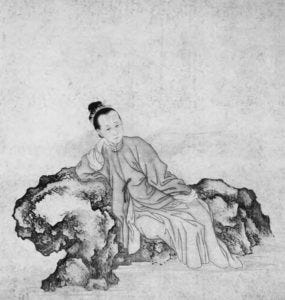
going down Wikipedia rabbit holes. This is a big one for me. Scroll down to the bottoms of articles and take a look at anything that suggests a similar article. Scroll to the bottom of the article about Ovid, for example, and you’ll find a category of Ancient Roman exiles. That leads you to a category of exiles by nationality. Now we’re cooking. Lots to explore and get ideas from. I didn’t use this person because he’s also a poet (like Ovid) but here is a very interesting Chinese exile, for example.
perhaps ironically given the name of the show, sometimes I have used an AI as part of this research. I want to be very very clear about what I do and don’t do here. I am not asking the AI to write the programme for me, OBVIOUSLY1. But, when I’m trying to fill in a gap like this and I have a very specific set of questions I have found that the AI can be very good at…
Keep reading with a 7-day free trial
Subscribe to Whatever Works to keep reading this post and get 7 days of free access to the full post archives.